In a world where concrete dominates the horizon and asphalt becomes the everyday landscape, cities increasingly face their own heat islands. Buildings, roads, and cars absorb the sun’s heat during the day and slowly release it at night, creating an air that never rests—even after the sun sets. Yet nature still offers a simple, quiet answer: forests. Yet nature still offers a simple, quiet solution: forests.
They are not just a source of oxygen or a home for life. Forests are, in fact, the most efficient air-conditioning system the planet has ever known. Every tree cools its surroundings, creates shade, preserves moisture, and transforms heat into fresh, breathable air. While we search for new solutions to climate change, forests have always known what we are only now rediscovering—how to help the planet breathe.
Concrete, asphalt, and glass don’t just shape our cities—they absorb heat. The phenomenon known as the Urban Heat Island effect is becoming increasingly pronounced across the globe. During the day, dark, hard surfaces trap solar energy, which is then slowly released back into the air at night. The result? Urban temperatures are often 5–8°C higher than in surrounding natural areas.
In Belgrade, for example, the difference between the city center and the forested areas of Avala can exceed 7°C during summer. Cities like Paris, Berlin, and Milan face similar challenges, with an increasing number of tropical nights—when temperatures don’t drop below 25°C—affecting public health, energy consumption, and overall quality of life.
When there are no trees, there is no natural shade and no moisture evaporation (a process known as evapotranspiration). This delicate microclimate balance—water, humidity, shade, and photosynthesis—is exactly what cities lack the most. Without it, surfaces heat up faster, and the air becomes dry and dense, saturated with carbon dioxide and fine dust particles.
The result is hotter cities, higher electricity consumption (as air conditioning systems run continuously), and increased stress on the human body. In this closed loop, people try to cool themselves with technology, while nature offers a free and sustainable solution—a tree.
In our technology-driven world, we often forget that the smartest cooling system already exists—and grows naturally. Trees and forests act as natural temperature regulators. As sunlight heats the ground, leaves absorb part of that energy and use it in evapotranspiration. This process “pulls” heat from the air and converts it into moisture—cooling the environment in much the same way the human body uses sweat to regulate temperature.
Rezultat? U okolini velikog drveta temperatura vazduha može biti niža i do 4°C, a površina ispod krošnje i 10-15°C hladnija u odnosu na beton ili asfalt.
When trees and vegetation are strategically placed, they form so-called green corridors—natural pathways through which heat and pollution are carried away from urban centers. These corridors allow airflow, retain moisture, and lower temperatures, creating a sense that the city can finally “breathe.”
In many global cities, such as Copenhagen and Vienna, urban planners now design tree-lined streets as part of climate strategies—not just as aesthetic features. Even a small park can reduce local temperatures, while larger forested areas create stable microclimates that mitigate extreme heat, retain humidity, and improve air quality.
That’s why when we talk about “cooling forests,” we don’t mean only vast natural reserves. We also mean green belts around factories, roads, schools, and business zones—places where every new tree means less heat, less noise, and more life.
Although it may sound symbolic, planting forests is not just an act of goodwill—it is scientifically proven to be one of the most effective ways to cool and restore the planet. Every tree, every hectare, every canopy plays a measurable role in restoring balance between nature and urban environments.
One hectare of forest can absorb up to 15 tons of CO₂ annually
A single mature tree can produce enough oxygen for more than 10 people per year
Forest areas are on average 1–2°C cooler than urban zones, and up to 15°C cooler beneath the canopy
Reduced need for cooling systems leads to lower energy consumption Cities with developed green infrastructure use up to 30% less air conditioning during summer
In simple terms, every planted tree contributes to cleaner air, cooler surroundings, and energy savings. It becomes a living part of an ecosystem that gives back—quietly and consistently.
Losing forest areas without planned restoration means losing a natural barrier against floods, wind, and drought. When forests are cut down, the consequences are not measured only in cubic meters of wood—but in entire ecosystems lost.
A forest is not just a collection of trees—it is a living system made up of hundreds of interconnected species, from soil microorganisms to insects, birds, and mammals. Each of them contributes to the balance of the microclimate.
Forests don’t just cool physically—they stabilize natural cycles. Within them, heat, water, carbon, and oxygen are constantly exchanged, creating something no technology can replicate: a self-sustaining system of life.
Imagine a city where traffic noise softens under tree canopies, where wind flows through tree-lined streets carrying moisture from parks, and where streets remain cool even in peak summer. Such cities already exist—and their number is growing.
In the past decade, many global cities have started bringing forests back into urban spaces: Paris is developing urban forests in former traffic zones; Vienna has introduced “cool corridors” connecting the Danube River with the city center; Milan created Bosco Verticale—vertical forests on residential buildings; Singapore, known as the “City in a Garden,” integrates greenery into every new development;
All of these initiatives share one goal: to help cities breathe again.
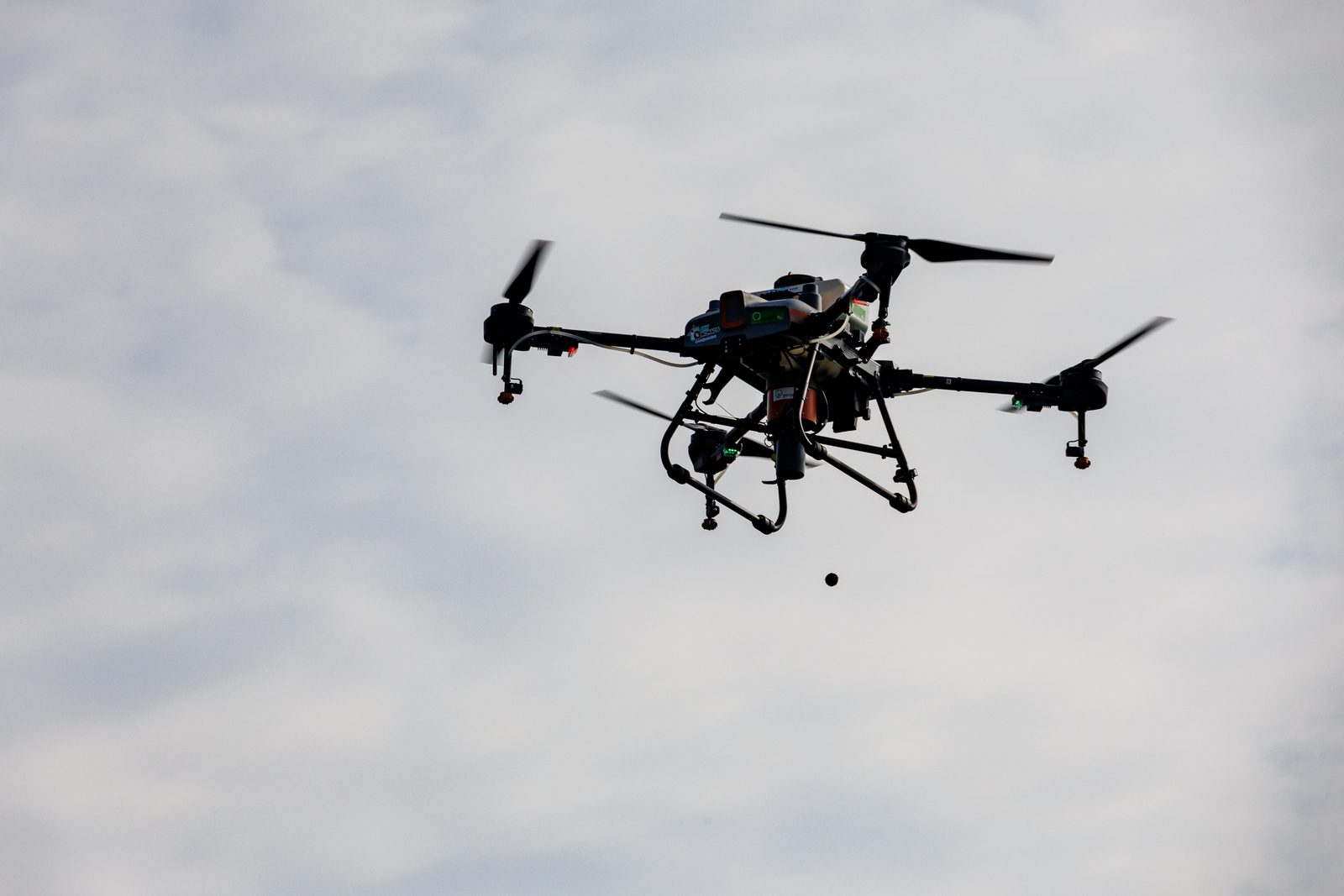
Reforestation used to mean days of manual labor—digging, planting, and working within limited areas. Today, that is changing through technology. Drones and artificial intelligence now allow ecosystems to be restored faster and more precisely than ever before.
Drones can now map terrain, identify eroded areas, analyze soil moisture and structure, and precisely determine the optimal locations for planting each seed. Artificial intelligence uses data on temperature, rainfall, and soil types to select tree species with the highest chances of survival and the greatest potential for carbon sequestration.
As a result, it is now possible to plant thousands of trees in a single day—even in hard-to-reach areas. When guided by natural principles, technology becomes the most precise ally of ecosystem restoration.
What makes this new era truly special is transparency and measurable impact. Satellite and drone imagery enable monitoring of seedling growth, assessment of vegetation health, and long-term oversight of reforested areas. In this way, reforestation is no longer a symbolic gesture—it becomes a measurable, long-term action with real data on its climate impact.
All of this leads to a simple conclusion: the future of ecology lies in the integration of innovation and nature. Technology that follows the rhythm of the Earth does not replace nature—it helps it breathe again.
Climate change knows no borders, but it recognizes responsibility. Every tree planted, every green space created, every decision to reduce energy consumption is part of the same chain that gives the planet a breath. Change doesn’t begin in laboratories or political halls—it starts with everyday actions, small but consistent.
Za kompanije, to znači korak dalje – ulaganje u projekte pošumljavanja, energetske efikasnosti i očuvanja biodiverziteta, koji istovremeno stvaraju i društvenu i ekološku vrednost.
Today, numerous initiatives make every donation, sapling, or act of engagement measurable, transparent, and long-lasting. What matters is that each of us finds our way to contribute—whether through personal action, collective efforts, or corporate strategy.
Cities will always grow, and technology will continue to advance—but without shade, freshness, and balance, no progress truly matters.
Forests teach us a simple lesson: true strength is not measured by noise, but by silence. What cools, cleans, and protects never demands attention—it simply needs space to exist.
When we plant a tree, we are not just creating shade. We are creating a memory of the moment we chose to contribute to something greater than ourselves. The future is not about technology, politics, or speed—it is about choices. And as long as we choose green, the planet has a chance to breathe again.