At first glance, Serbia looks like a country of green balance. Mountains covered with beech trees, the dense forests of Tara, the pines of Zlatibor, and the endless canopies of Fruška Gora – images we are used to seeing on postcards and nature campaigns. But beneath that picture lies a different reality: thousands of hectares of forest disappear every year, and new plantings do not keep pace with this rhythm.
Some forests are cut down deliberately, others quietly, without any oversight. Fires, erosion, droughts, and human negligence slowly turn green slopes into dry, lifeless areas. And as we cut trees to build roads, factories, and cities – we lose silent allies that protect us from floods, heat, and pollution.
Serbia is a country where nature is still deeply present—but not sufficiently protected. According to the latest estimates, around 29% of Serbia’s territory is covered by forest, significantly less than the European average, which exceeds 43%. Although this percentage may not seem dramatically low at first glance, behind the number lies a much deeper problem: the quality, density, and age of our forests are declining.
The largest forest areas are located in western and southwestern Serbia – in Tara, Kopaonik, Golija, and parts of Raška and Zlatibor districts. The Pannonian Plain and central parts of the country, on the other hand, have drastically lower forest coverage, and the number of new plantings grows slowly and often unsustainably.
During the 20th century, Serbia lost more than 1.5 million hectares of forest, mostly due to agriculture, timber exploitation, and industrial expansion. Although reforestation efforts have been implemented in recent years, they still cannot compensate for the losses. In many areas, especially in Vojvodina, forests are fragmented and reduced to narrow strips between fields – more as decoration than as real ecosystems.
In other words, Serbia today is losing not only forest area but also the natural balance these forests maintain. Every tree that disappears means less oxygen, less moisture, more erosion, and eventually, hotter cities and drier rivers.
Forest loss in Serbia is not the result of a single cause, but a combination of human decisions, economic needs, and climate change. While in the past fires or diseases were sometimes the main destroyers, today it is much more often humans. From unregulated logging to the expansion of cities and highways, forests disappear quietly, often without planning or accountability.
The greatest enemy of forests in Serbia remains uncontrolled logging.
Although there is a law for the protection of forest resources, its implementation is often inconsistent. In many regions, especially in eastern and southern Serbia, trees are cut without a permit, either for firewood, sale, or processing. This practice not only reduces forest area but also disrupts their ecological balance – young seedlings do not replace old trees, and the soil remains unprotected from erosion.
Losing forest areas without planned restoration means losing a natural barrier against floods, wind, and drought. When forests are cut down, the consequences are not measured only in cubic meters of wood—but in entire ecosystems lost.
In recent years, Serbia has experienced record-high temperatures and increasingly long dry periods. These changes directly affect forest ecosystems: the soil becomes drier, vegetation loses moisture, and the risk of fires rises. Summer fires, especially in the south and west of the country, can destroy in a few days what has grown for decades.
Additionally, climate change brings new plant diseases and pests that attack already weakened trees. The combination of warmer winters and dry summers creates conditions in which forests can no longer regenerate naturally.
The development of cities and industrial zones often comes at the expense of nature. New residential districts, roads, mines, and power plants frequently “consume” hectares of forest land. Urbanization in Serbia often lacks a clear compensation policy – forests lost to construction are rarely replanted.
Even when new seedlings are planted, they are usually monocultures, with limited biodiversity and lower resistance to climate change. Thus, forests that exist “on paper” cannot replace those disappearing in reality.
The problem of forest loss is not only physical but also cultural and institutional. Many citizens still do not recognize forests as key infrastructure for life – like water, electricity, or healthcare. Because forests are often seen as “someone else’s property,” the sense of responsibility toward them is weak.
Institutions that are supposed to protect forest resources are often under-resourced or lack sufficient means for inspection and supervision. Without education, transparency, and accountability, any reforestation strategy remains only a plan on paper.
A tree is never just a tree. It is a source of oxygen, a home for dozens of living species, protection from the wind, and a silent factory that transforms carbon dioxide into life. Although we often see the forest as a whole, each individual tree has its role in the planet’s balance – just like a cell in an organism.
One large, healthy tree can absorb up to 150 kilograms of CO₂ per year, produce oxygen for four people, and lower the air temperature around it by several degrees.
But its value does not end at the canopy. Its root system protects the soil from erosion, absorbs excess water during rains, and prevents floods. In mountainous areas, where slopes are prone to landslides, forests are the most important natural shield – silent guardians that stabilize the land.
When forests disappear, so does the soil’s ability to “breathe.” Without roots that retain moisture, water runs off faster, the soil dries out, and floods become more frequent. Forests are also the largest natural air filter, capturing dust, particles, and toxins emitted daily by industry and traffic.
Therefore, every lost forest means worse air quality, drier rivers, and more unstable soil. These are not abstract consequences—they are effects we feel during hotter summers, dry springs, and sudden floods.
In Serbia, forests cover mountains that provide water, soil that feeds, and landscapes that define us. When forests disappear, it is not only nature that is lost – it is a part of the country’s identity. Therefore, forest restoration is not just an ecological task but also a cultural responsibility. It is a way to protect what has always protected us and to return to the land what we owe it.
Forests cannot be restored overnight, but the direction we are heading can change immediately. This depends not only on politics or institutions but on every individual, company, and community that chooses to see nature as a partner, not a resource.
A healthy forest resource does not arise by itself. Clear laws, sustainable timber policies, and long-term reforestation plans are necessary. Many countries have already demonstrated that this works – Scandinavian countries and Germany implement precise strategies in which every cut tree must be replaced with a new one.
In Serbia, systemic changes would mean:
Better control and digital monitoring of logging,
Introduction of a mandatory “green fund” for every construction project,
Increased budget for reforestation and protection of existing forests.
But no law will be sufficient without a change in awareness – that every planting, every action, and every decision has a long-term effect.
The corporate sector has enormous power to accelerate change. More and more companies worldwide invest in reforestation and restoration of natural resources, understanding that it is more than image—it is an investment in the future. Local communities, schools, and NGOs in Serbia are already initiating small but significant efforts: planting in parks, restoring local groves, educating children about nature.
These actions may seem small, but they multiply and grow, just like a seed that becomes a forest.
When companies, schools, and citizens collaborate, reforestation becomes a cultural value, not a one-off campaign.
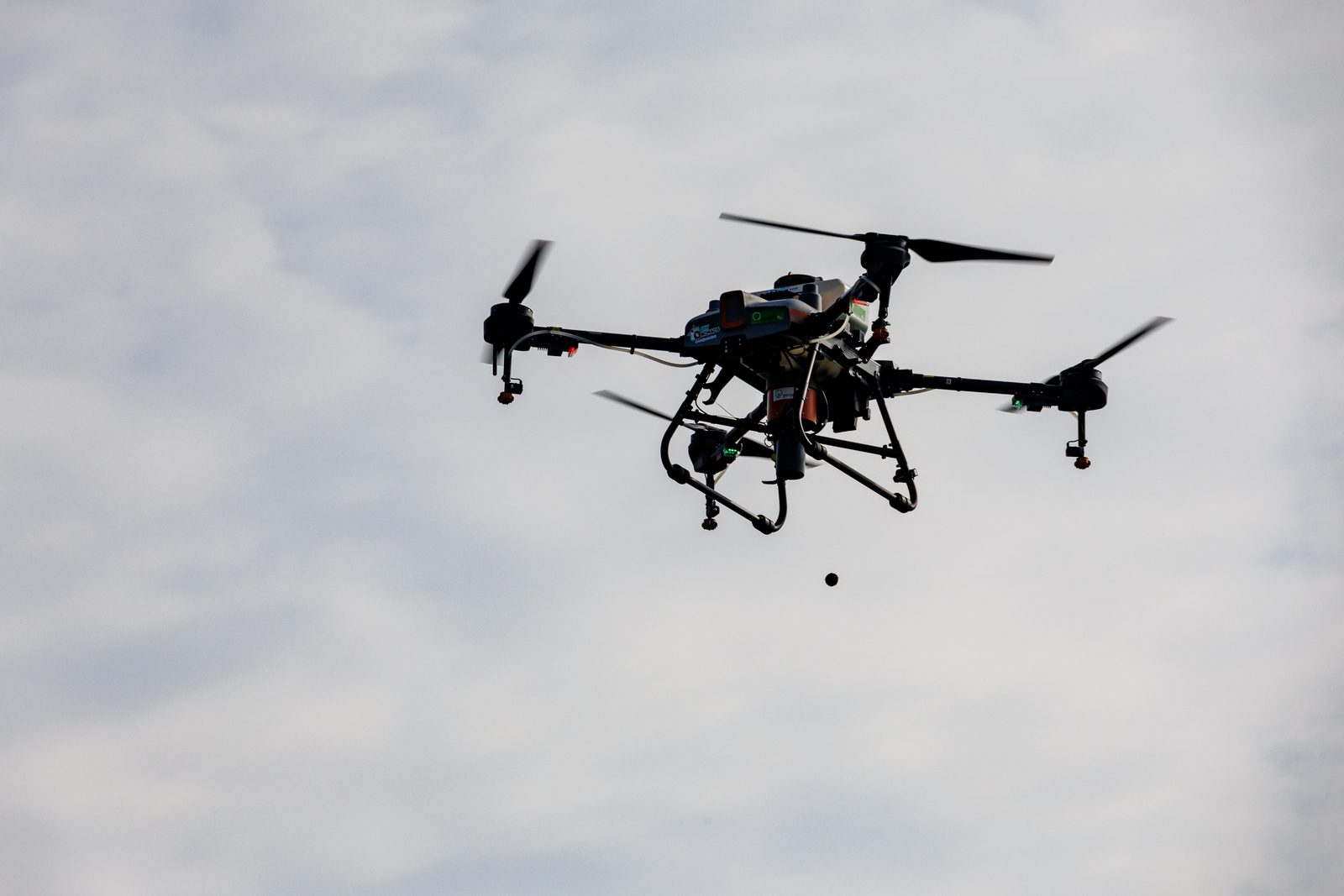
Technology today is changing the way we understand and restore forests. Drones can scan terrain, monitor moisture, and plant seeds in hard-to-reach areas—quickly, accurately, and at low cost. Satellite imagery allows real-time monitoring of forest growth and health, while soil sensors measure moisture and temperature, helping experts identify risks from fires or disease.
These systems are not a replacement for human hands but an extension of our care for nature. They show that technology and ecology do not have to be opposed—in fact, only together can they be effective.
We may not be able to restore every cut tree, but we can begin planting new, better chapters. Serbia’s forests ask little of us – only that we listen as they disappear and act while there is still time. Every tree we plant today means shade tomorrow, water the day after, and life forever.
Imagine a land where rivers flow again through forested valleys, where the wind returns cooler, and children grow up in an environment where green is not a luxury, but a daily reality.
Change does not begin with grand plans, but with small decisions. In one seedling, in the day we dedicate to nature, in the collective effort and belief that balance can be restored. If each of us plants just one tree—not as an obligation, but as gratitude to the earth—then this story will have the ending it deserves: a land that breathes, and people who made it possible.