
Forests around the world are facing serious challenges—from deforestation and climate change to soil degradation. While traditional reforestation methods remain valuable, they often cannot keep pace with the speed at which nature is losing trees. This is where technology becomes a crucial ally.
Drones and artificial intelligence (AI) are emerging as powerful tools in reforestation, enabling faster, more precise, and more sustainable forest planting. These innovations not only accelerate nature’s recovery but also increase the likelihood that every planted seed will thrive. In a world where forest conservation is critical to the planet’s health, modern technology brings new hope.
Conventional reforestation methods largely rely on manual labor. Seeds or saplings are planted by hand, and their growth is monitored over time. While these methods have a long-standing tradition and importance, they face several limitations:
Scalability: Manual planting is slow and cannot easily cover large areas in a short time
Costs: Labor and logistics can be expensive, especially in remote or difficult terrains
Environmental challenges: Climate change, soil degradation, and erosion reduce planting success rates
As a result, even the most ambitious reforestation projects often struggle with coverage and seedling survival. It is clear that a new approach is needed—one that is more efficient and scalable.
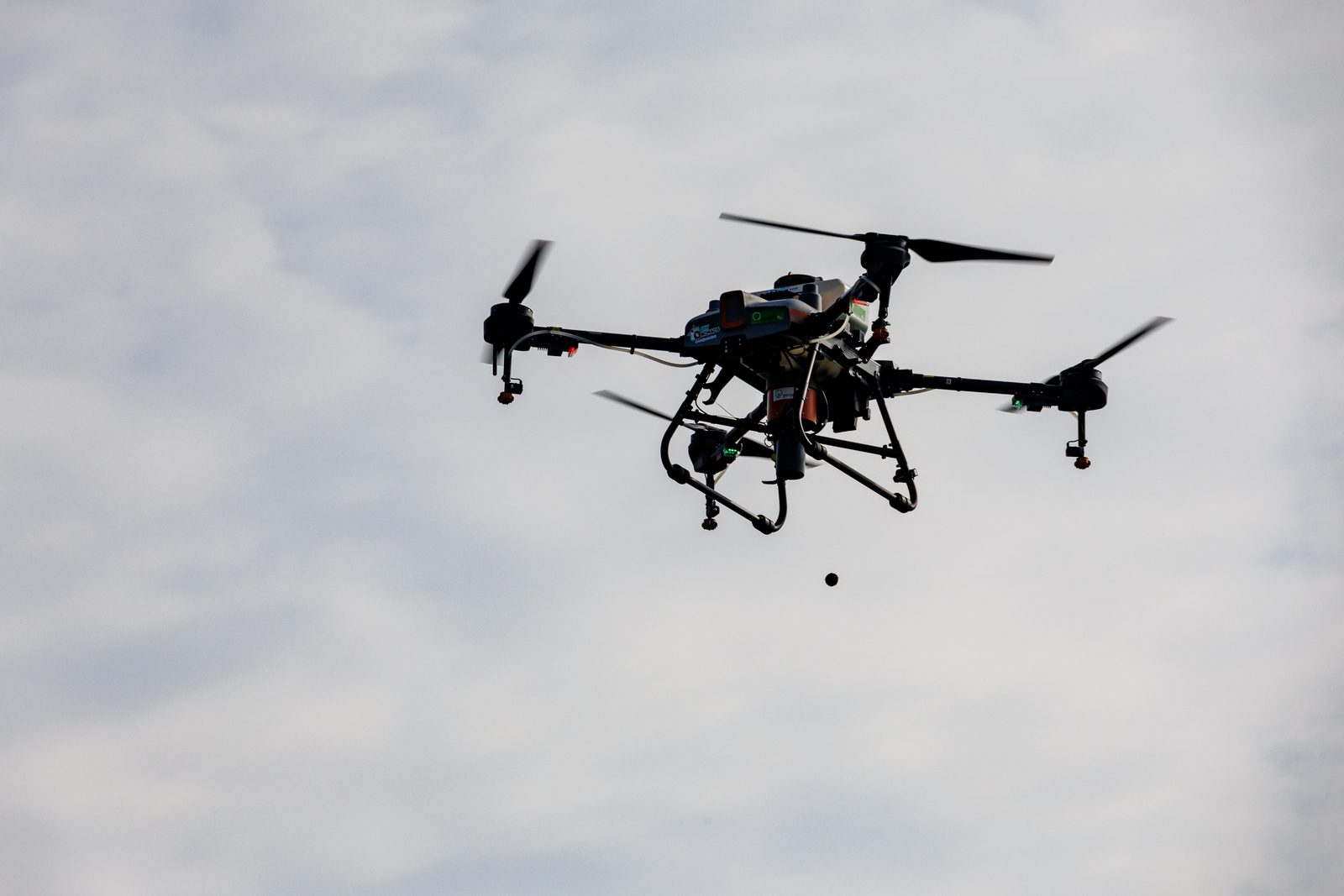
Drones have introduced a true revolution in reforestation, enabling fast and precise planting in areas that were previously inaccessible. Instead of manual planting, drones can carry seeds or seedlings and distribute them accurately across the terrain.
Reforestation drones use autonomous flight systems and specialized mechanisms to disperse seed capsules.
Each capsule contains seeds, nutrients, and moisture-retaining components
AI systems plan drone routes and seeding density based on soil and microclimate analysis
Flights can be executed in sequences, covering dozens of hectares within hours
Speed: Up to several times faster than manual planting
Precision: AI ensures optimal seed distribution
Eco-friendly: Minimal disturbance to soil and vegetation
Accessibility: Capable of operating in steep, remote, or protected areas
Artificial intelligence (AI) is a key component of modern reforestation technology. While drones act as the “hands” that plant, AI serves as the brain that determines where, how, and how much to plant.
AI analyzes terrain based on:
Slope and elevation
Soil type and moisture levels
Wind exposure and microclimate patterns
Using this data, AI generates optimal drone routes, flight speeds, and seed distribution patterns—maximizing coverage while minimizing waste.
AI not only plans planting but also tracks seedling progress in real time:
Satellite and drone imagery is analyzed to assess germination rates
Growth trends and seed loss are predicted, enabling timely adjustments
A digital “forest footprint” creates a data foundation for long-term sustainability
Greater precision and efficiency in every operation
Higher seedling survival rates
Reduced time and resource requirements
A scalable and sustainable solution applicable worldwide
Drones enable rapid planting across large areas, reducing the time land remains exposed to erosion.
Less soil degradation
Faster CO₂ absorption
Automated reforestation reduces the need for heavy machinery and large-scale transport, lowering greenhouse gas emissions.
AI-driven planning allows for:
Selection of native tree species for each micro-zone
Optimal distribution that supports natural ecosystem regeneration
Even though drones operate autonomously, these projects inspire communities, companies, and institutions to engage in environmental responsibility.
Raise awareness of sustainability
Demonstrate how the private sector can contribute to ecological impact
The future of reforestation lies in the integration of technology and ecology. With the advancement of drones and AI, it is now possible to scale projects globally—even in areas that were once inaccessible.
Public and private sectors can collaborate, companies can actively participate through CSR initiatives, and technology enables transparency and measurable impact.
This is an opportunity to turn reforestation into a global, scalable, and data-driven movement—where technology serves nature, not the other way around.
Drones and artificial intelligence are transforming the way we plant forests, making reforestation faster, more precise, and more effective. This new era allows nature to regenerate in alignment with the needs of both the planet and society.
Smart reforestation is not just an innovation—it is an investment in the future. A way for technology and ecology to work together, delivering long-term benefits for generations to come.


